Occurrence and Consequences

- On average in the United States in 2008, someone died in a fire about every 158 minutes, and someone was injured every 31 minutes (Karter 2009).
- Four out of five U.S. fire deaths in 2008 occurred in homes (Karter 2009).
- In 2008, fire departments responded to 403,000 home fires in the United States, which claimed the lives of 2,755 people (not including firefighters) and injured another 13,560, not including firefighters (Karter 2009).
- Most victims of fires die from smoke or toxic gases and not from burns (Hall 2001).
- Smoking is the leading cause of fire-related deaths (Ahrens 2009a).
- Cooking is the primary cause of residential fires (Ahrens 2009a).

Cost

- Fire and burn injuries represent 1% of the incidence of injuries and 2% of the total costs of injuries, or $7.5 billion each year (Finkelstein et al. 2006).

- Males account for $4.8 billion (64%) of the total costs of fire/burn injuries.
- Females account for $2.7 billion (36%) of the total costs of fire/burn injuries.
- Fatal fire and burn injuries cost $3 billion, representing 2% of the total costs of all fatal injuries.
- Hospitalized fire and burn injuries total $1 billion, or 1% of the total cost of all hospitalized injuries.
- Non-hospitalized fire and burn injuries cost $3 billion, or 2% of the total cost of all non-hospitalized injuries.


Groups at Risk

Groups at increased risk of fire-related injuries and deaths include:

- Children 4 and under (CDC 1998; Flynn 2008);
- Older Adults ages 65 and older (CDC 1998; Flynn 2008);
- African Americans and Native Americans (CDC 1998; Flynn 2008);
- The poorest Americans (Istre 2001; Flynn 2008);
- Persons living in rural areas (Ahrens 2003; Flynn 2008);
- Persons living in manufactured homes or substandard housing (Runyan 1992; Parker 1993).

Risk Factors

- Approximately 4 out of 10 home fire deaths occur in homes without smoke alarms (Ahrens 2009b).
- Most residential fires occur during the winter months (CDC 1998; Flynn 2008).
- Alcohol use contributes to an estimated 40% of residential fire deaths (Smith 1999).

Fire Prevention Tips

- Never leave food unattended on a stove.
- Keep cooking areas free of flammable objects (such as, potholders and towels).
- Avoid wearing clothes with long, loose-fitting sleeves when cooking.
- Never smoke in bed or leave burning cigarettes unattended.
- Do not empty smoldering ashes in a trash can, and keep ashtrays away from upholstered furniture and curtains.
- Never place portable space heaters near flammable materials (such as, drapery).
- Keep all matches and lighters out of reach of children. Store them up high, preferably in a locked cabinet.
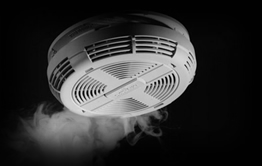
- Install smoke alarms on every floor of the home, including the basement, and particularly near rooms in which people sleep.
- Use long-life smoke alarms with lithium-powered batteries and hush buttons, which allow persons to stop false alarms quickly. If long-life alarms are not available, use regular alarms, and replace the batteries annually.
- Test all smoke alarms every month to ensure they work properly.
- Devise a family fire escape plan and practice it every 6 months. In the plan, describe at least two different ways each family member can escape every room, and designate a safe place in front of the home for family members to meet after escaping a fire.
- If possible, install or retrofit fire sprinklers into home.

SOURCE: CDC.GOV

Home Self-Inspection Checklist

SMOKING HABITS
Are all matches and lighters kept out of children’s reach? ____
Is “no smoking in bed” a rule of the house? ____
Is your family aware that ashtrays should never be emptied into waste baskets? ____
Are there plenty of large, safe ash trays throughout the house? ____
Do you check for smoldering cigarette butts in the furniture? ____

ELECTRICAL HAZARDS
Are appliances checked periodically for good operating condition? ____
Are you careful not to run extension cords under rugs or over hooks and nails? ____
When using extension cords for appliances, does the gauge of both cords match in size? ____

HOUSEKEEPING
Do you keep rubbish cleaned out of attics, garages and yards? ____
Is paint kept in tightly closed metal containers? ____
Are flammable liquids stored in safety cans and kept away from heat and children? ____
Have you made it a rule to never use flammable liquids for cleaning clothes or starting fires? ____
Are oily rags kept in a tightly sealed container? ____
Have all dried grass cuttings, tree trimmings and weeds been removed from your property? ____

HEATING AND COOKING
If you have a fireplace, is a screen always placed in front of it? ____
Is the filter for your forced air heater changed yearly and the venting cleaned? ____
Are furnaces and wood burning stoves in good repair and located away from combustible walls
and ceilings? ____
Do you have the fireplace chimney cleaned and checked periodically? ____
Do you make sure combustibles are not stored near the stove, heater or fireplace? ____
Do your children keep a safe distance from flame and heat sources? ____

SMOKE DETECTORS
Have you installed a smoke detector inside every sleeping area and on each floor? ____
Do you test your smoke detector(s) every month? ____

FIRE ESCAPE PLAN
Does your family have a fire escape plan prepared? ____
Is your escape plan posted and regularly practiced? ____
Does each bedroom have two exits? ____
Do all family members know how to dial 911 for fire, police or medical emergencies? ____
Do you show your babysitter the escape routes from your home and review 911 with her/him? ____
Does your family (and babysitter) know the first rule in fire emergencies: get everyone out fast
and don’t go back inside? ____

Every “NO” checked on this list shows where your family’s safety precautions fall short.
Take action – family action NOW!